Learning how to prevent split ends starts with understanding what they are and why they happen. A split end is the tip of a hair strand that has frayed into two or more pieces, usually after months of brushing, heat styling, and everyday friction. Once a hair splits, it cannot be sealed back together, but you can slow new splits from forming and keep the rest of your hair looking healthy. This guide explains how to prevent split ends with simple habits: regular trims, gentle brushing, kinder heat styling, looser hairstyles, and a silk pillowcase. None of these steps is complicated, and together they help your hair look smoother, neater, and easier to manage.
What Split Ends Are
Hair is at its oldest and weakest at the ends. Each strand has a protective outer layer, and when that layer wears down, the tip can split into fine, feathery pieces. You may notice them most in bright light or when your hair feels rough at the bottom. Long hair shows splits more often simply because the ends have been around longer and have survived more brushing, washing, and styling. Dryness makes the problem worse, since dry hair is less flexible and more likely to snap. Split ends are a normal part of having hair, not a sign that you have done something wrong, but a few steady habits can keep them from forming so quickly.
Get Regular Trims
The most reliable way to deal with split ends is to trim them away before they travel further up the strand. A small trim every six to eight weeks removes the damaged tips while keeping most of your length. If you are growing your hair out, ask for a light dusting, which takes off only the very ends. Waiting too long between trims lets splits climb higher, so you eventually have to cut off more than you would have with regular visits. A trim is not a failure of your hair routine; it is part of it. Think of it as routine maintenance, like sharpening a pencil, and your hair will look fuller and neater between visits.
Use Heat Protectant and Lower the Heat
Heat is one of the biggest causes of split ends. Flat irons, curling wands, and high-heat blow-drying strip moisture from the hair and weaken its outer layer. A heat protectant product, applied before styling, forms a light barrier that reduces some of that damage, and it is worth using every time you reach for a hot tool. Lower heat settings also help: most styles do not need the highest temperature, and a medium setting with a slower pass is often enough. Letting your hair air-dry part of the way before blow-drying cuts down the total time under heat. Giving your hair a break from hot tools on some days is one of the simplest ways to keep the ends in better shape.
Brush Gently
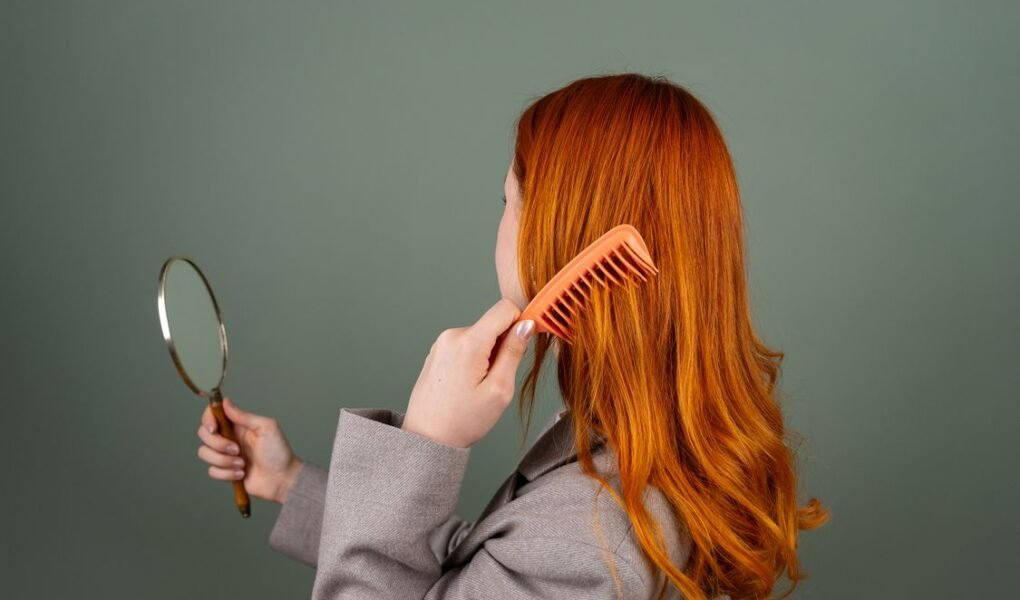
Brushing seems harmless, but rough brushing can snap hair and create the very splits you are trying to avoid. Start at the ends and work your way up in short sections, instead of dragging a brush from the roots down through tangles. A wide-tooth comb is a gentle choice for detangling wet hair, which is more fragile than dry hair, while a soft bristle brush works well on dry hair. Use light, patient strokes, and pause to work out knots with your fingers when you find them. Yanking through a tangle may feel faster, but it breaks strands and roughs up the ends. A few calm minutes of gentle brushing protects your hair far better than a hurried, forceful session.

Loosen Tight Hairstyles
Very tight ponytails, braids, and buns pull on the hair and create stress at the same spots day after day. Over time, that repeated tension can weaken strands and lead to breakage and splits, especially around the hairline and the ends. Looser styles are kinder: a soft, low ponytail, a loose braid, or hair worn down gives your strands a rest. If you use hair ties, choose soft, fabric-covered ones without metal parts, and vary where you place your ponytail so the same spot is not always under pressure. Sleeping with hair loosely braided can also keep it from tangling overnight. Small changes in how you tie your hair add up over weeks and months.

Try a Silk Pillowcase
Your pillowcase matters more than you might think. Cotton pillowcases can be rough on hair, creating friction as you move in your sleep, and that friction can tangle and snap the ends. A silk or satin pillowcase lets hair glide more smoothly, so you may wake up with fewer tangles and less frizz. It is a small change that works while you sleep and requires no extra time at all. If a silk pillowcase is not for you, a loose braid before bed is another easy way to reduce overnight tangling. Either way, the goal is the same: less friction, fewer knots, and ends that stay smoother for longer.
Why Split Ends Cannot Be Repaired
It is worth being honest about one thing: once a hair has split, no product can fuse it back together. Hair is not living tissue, so it cannot heal. Products that claim to mend split ends can only coat the hair and make the split less visible for a short while; they do not restore the strand. The only real fix is a trim. That is why prevention matters so much. Regular trims, gentle handling, and less heat keep new splits from forming, and a leave-in conditioner or a light hair oil can help the ends look smoother and feel softer in the meantime. If a product promises a permanent repair, treat the claim with caution and keep your expectations realistic.
A Simple Routine for Healthier-Looking Hair
Putting it together takes only a few minutes a day. Wash with lukewarm water, use conditioner on the lengths and ends, and detangle gently with a wide-tooth comb. Apply heat protectant whenever you style with heat, wear looser hairstyles most days, and sleep on a silk pillowcase or with a loose braid. Book a trim every six to eight weeks, and keep a simple, steady routine rather than chasing quick fixes. It also helps to keep the rest of your care simple; a calm hair routine pairs well with a simple skincare routine, like the one in our guide to skincare routine basics. For more hair guidance, browse our Hair Care collection, and learn more about who we are on our About Us page.
Conclusion
Preventing split ends is about steady, gentle habits rather than expensive products. Trim regularly, protect your hair from excess heat, brush with patience, wear looser styles, and give your ends a smoother night on a silk pillowcase. Remember that splits cannot be repaired, only trimmed, so prevention is the real goal. With a little consistency, your hair can look smoother, healthier, and easier to manage, and your trims can stay small instead of dramatic.
This article shares general beauty information only, not medical advice. See our disclaimer.